
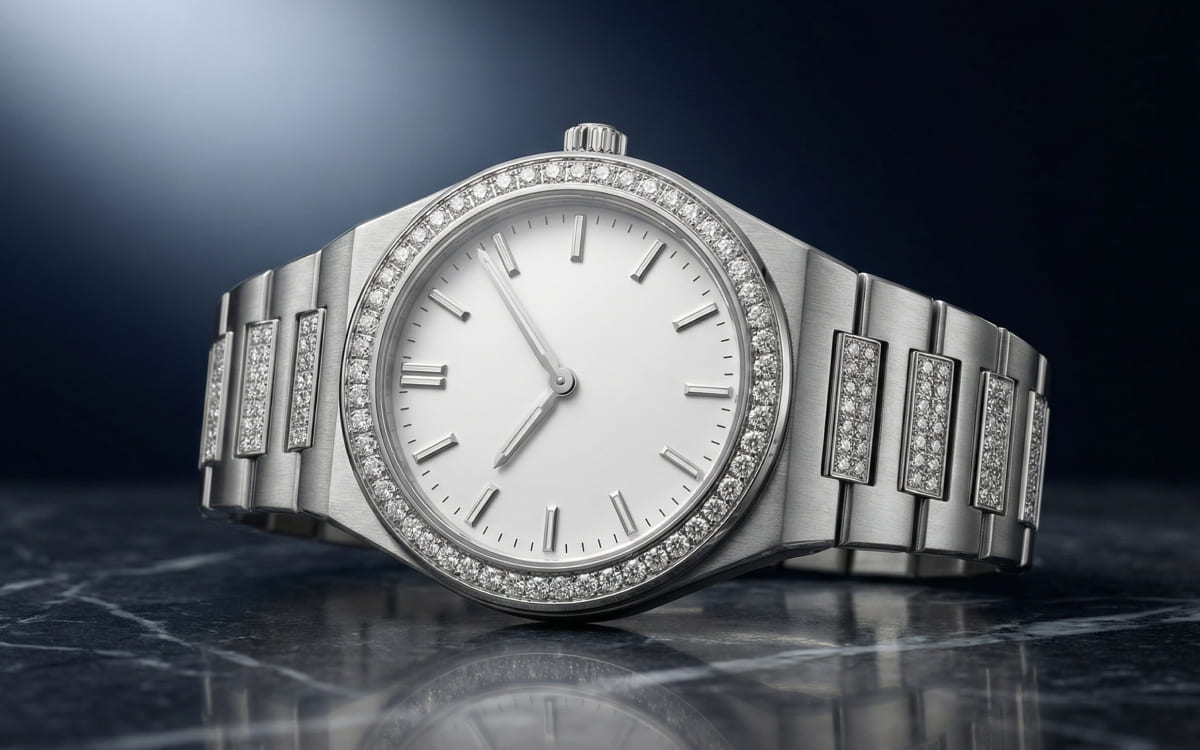
Diamond‑set watches blend fine horology with the glamour of jewelry. Whether you’re looking for a subtle accent or a bold statement piece, choosing the right watch requires more than just falling in love with its sparkle. Understanding diamond quality, craftsmanship and fit will help you make a purchase that brings joy for years to come. Below is a comprehensive guide to selecting a diamond watch.
Understand the quality of the diamonds
Know the “four C’s” and certification
The quality of the diamonds in your watch defines its brilliance and value. Jewelers evaluate stones using the four C’s—**cut**, **color**, **clarity** and **carat weight**—and reputable timepieces include diamonds certified by established gemological institutes. A good cut maximizes sparkle; color grades closer to “colorless” command higher prices; clarity describes the absence of visible inclusions; and carat weight refers to the combined weight of the stones. Ask for certification documents from trusted laboratories to verify authenticity.
Check the metal and construction
A diamond watch is only as durable as its underlying case and bracelet. Luxury models use robust materials such as stainless steel, gold or titanium; these metals support the embedded stones and resist wear. Examine the case, bezel and bracelet to ensure they are built to hold diamonds securely without looking bulky. Designs that leave enough metal around each stone tend to last longer and feel more comfortable.
Choose a design and setting that suits your style
Diamond watches come in myriad styles—from minimalist dials with a few accent stones to lavish pavé designs. Reflect on how you intend to wear your watch. A timeless design can transition from work to evening attire, whereas a statement piece might be reserved for special occasions.
Understand different settings and cuts
Diamonds on watches are often set close together in a **pavé** style, which requires numerous small stones to cover the bezel or dial. **Brilliant‑cut** diamonds maximize light reflection and create dazzling sparkle, while **baguette‑cut** stones produce a more understated look and can increase the overall carat weight because less material is cut away. Common setting techniques include pavé, bead, channel and prong settings; each affects how securely the stones are held and the overall appearance. Examine the alignment of stones and the quality of the setting—well‑executed pavé work looks continuous and smooth.
Consider movement, features and price
Mechanical versus quartz movements
Luxury watches use either **automatic (mechanical)** or **quartz** movements. Automatic movements are prized for their intricate mechanics and require winding, whereas quartz movements are battery‑powered and offer worry‑free accuracy. Select a movement that matches your lifestyle; enthusiasts may appreciate the craftsmanship of automatics, while those seeking reliability might prefer quartz.
Useful features
Beyond telling the time, many diamond watches include functions such as water‑resistance, chronographs or moon‑phase indicators. A scratch‑resistant sapphire crystal helps protect the dial from everyday wear. Decide which features you value and ensure they are present in your chosen model.
Assess value for money
Compare prices across brands and retailers, taking into account diamond quality, craftsmanship and additional features. A higher carat weight or more intricate setting typically increases cost. Research the reputation of both the watch brand and the seller; established brands usually guarantee better craftsmanship and after‑sales support. A comprehensive warranty is important for protecting your investment.
Prioritize fit and comfort
Even the most exquisite watch needs to feel comfortable on your wrist. Try on different sizes to ensure the case sits snugly but not too tightly; adjustable bracelets or straps provide flexibility. Consider the weight—diamond‑studded watches can be heavier than non‑adorned models, so choose a size and heft appropriate for your wrist.
Final thoughts
Purchasing a diamond watch is a balance between aesthetics, quality and practicality. By paying attention to the four C’s, examining the watch’s metal and craftsmanship, selecting a setting that reflects your style, evaluating the movement and features, and ensuring a comfortable fit, you can select a watch that offers beauty, durability and value. Armed with this knowledge, you’ll be better equipped to choose a sparkling timepiece that truly reflects who you are.