
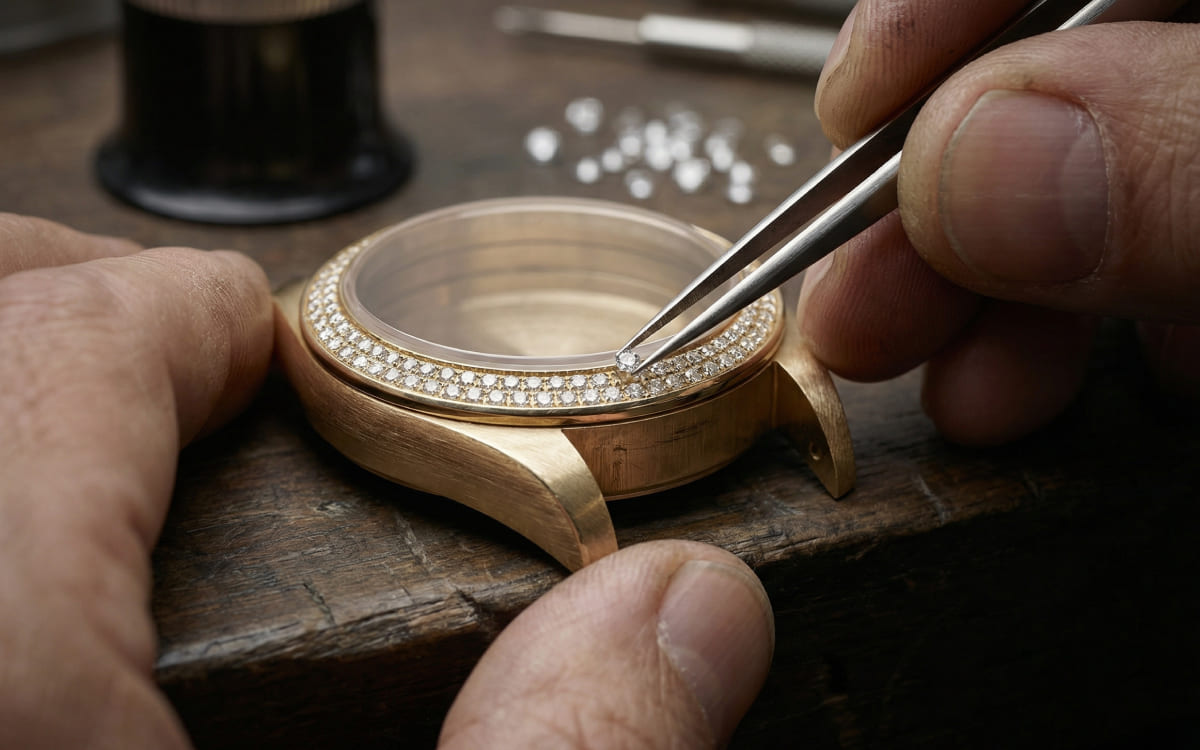
Behind every sparkling diamond watch lies a meticulous process that marries jewelry artistry with watchmaking precision. Understanding this craft can deepen your appreciation for these luxurious timepieces and guide you in selecting quality pieces.
The five C’s and stone selection
Diamond quality is assessed using the five C’s: **carat**, **cut**, **clarity**, **color** and **certification**. Carat refers to weight—watchmakers often use numerous small stones rather than a few large diamonds because pavé designs require many gems to cover the surface. The **cut** influences how a diamond reflects light: brilliant‑cut stones maximize sparkle, while baguette‑cut diamonds provide understated elegance and may increase overall carat weight. Although clarity and color are less critical in tiny watch diamonds, prestigious brands still favor high grades—often VVS2 or better—and near‑colorless stones. **Certification** ensures the stones are ethically sourced; watches should adhere to the Kimberley Process to prevent conflict diamonds.
Designing with diamonds in mind
Creating a diamond watch starts with design. Brands plan gem‑set models from the beginning instead of sprinkling stones on an existing watch. Designers decide where diamonds will be placed—bezel, dial, bracelet or entire case—and adjust the thickness of the bezel and curvature of the lugs to leave enough metal to hold stones securely. Well‑designed diamond watches sit comfortably on the wrist and maintain the integrity of the timepiece.
Choosing and matching diamonds
Stone selection is more than a random grab; gem specialists choose diamonds closely matched in color, clarity and size. Even small differences become noticeable on a bezel or dial if stones vary in hue or brilliance. Consistency creates an even field of sparkle and separates truly luxurious watches from those that look busy.
Setting techniques and craftsmanship
Setting diamonds is a labor‑intensive craft. Techniques such as **pavé**, **bead**, **channel** and **prong** setting require drilling tiny holes, placing each stone precisely and securing it with small beads or prongs of metal. Pavé settings involve many small stones placed close together, while channel settings align stones between metal strips; prong settings use tiny claws to hold each gem. Manufacturers may also use specialized settings like **snow** and **invisible** settings. Snow settings arrange diamonds in seemingly random patterns to create a “freshly fallen snow” effect. Invisible settings hide the metal beneath the stones, giving the impression of a seamless surface. These advanced techniques demand highly skilled artisans and can cost more than the stones themselves.
Assembly and quality control
Once gem‑setting is complete, watchmakers assemble the movement, dial, case and bracelet. Added weight from diamonds and structural changes must not compromise timekeeping or water resistance. Finishing involves smoothing edges, checking prongs and inspecting the watch under magnification and normal light to ensure every stone is secure and aligned. Only after passing these tests does the watch earn the title of a luxury diamond timepiece.
Ethical sourcing and certification
Responsible watchmakers source diamonds that adhere to the Kimberley Process Certification Scheme to prevent conflict diamonds from entering the market. Although small stones used in pavé settings aren’t individually certified, reputable brands still follow ethical sourcing practices. When purchasing a diamond watch, ask about the origins of the stones and whether the brand is a member of the Responsible Jewelry Council.
Closing thoughts
Knowing how diamond‑set watches are designed and crafted enables you to appreciate their artistry and make informed buying decisions. From planning gem placement to selecting and matching stones, from intricate settings to final assembly, each step involves expertise and precision. By choosing watches from brands that value quality, ethical sourcing and skilled craftsmanship, you’ll own a timepiece that is both beautiful and meaningful.